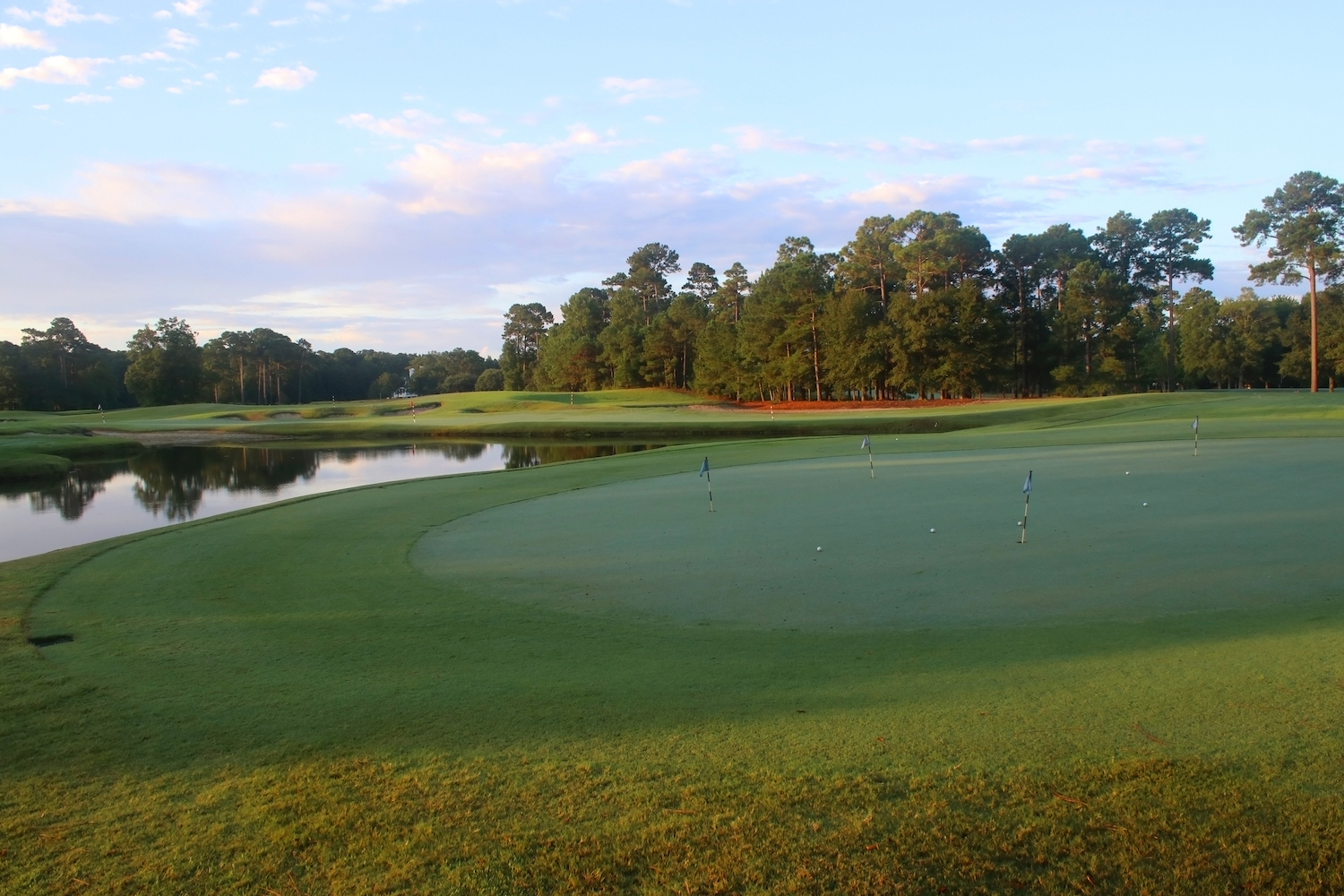
Most regions earn a nickname through tourism marketing. The Grand Strand earned its reputation through something harder to manufacture: sheer, undeniable golfing excellence on a scale that has no real parallel anywhere else in North America.
The Myrtle Beach area — anchored on its northern end by the Brunswick County communities of North Carolina — is known around the golfing world simply as “Golf Town USA.” It’s a nickname that tells the whole story before you even pick up a club.
How the Grand Strand Became Golf Town USA
It started modestly enough, with the opening of Pine Lakes Country Club in 1927 — the first golf course along the Grand Strand, designed by Robert White, the first president of the PGA. For decades, it remained one of the few. Then, beginning in earnest in the late 1960s and accelerating through the 1970s, 80s, and 90s, the Grand Strand experienced one of the most extraordinary concentrations of golf course development in the history of the sport. Developers saw what the natural landscape offered — the tidal marshes, the river systems, the coastal terrain — and the legendary designers came running.
By the end of the 20th century, the Grand Strand had over 120 championship courses operating across its 60-mile stretch of coastline. The numbers were remarkable: at its peak, the region recorded over 4.2 million rounds of golf in a single year. Nowhere else on the East Coast could come close. The “Golf Capital of the World” title wasn’t marketing spin — it was math.
Today, that number has settled to around 80 to 90 courses on the South Carolina side alone, with 20-plus additional courses filling out Brunswick County on the North Carolina end. The total footprint of championship golf accessible from a single community like Kingfish Bay in Calabash is almost difficult to comprehend. Golf Digest has documented 47 courses within just a 15-mile radius of Calabash — 44 of them open to the public.
One course roughly every quarter mile. That is what Golf Town USA looks like on a map.
The Designers Who Made It Legendary
What separates the Grand Strand from other high-volume golf markets isn’t just quantity — it’s the caliber of the minds who shaped it. The roster of architects who have designed courses here reads like the Mount Rushmore of golf design, several times over.
Arnold Palmer left two fingerprints on this region, most notably at Rivers Edge Golf Club in Shallotte, NC — a course that Golf Digest placed on its list of America’s 100 Greatest Public Courses and Golf Magazine ranked among its top 20 new courses nationally. Sitting along the bluffs and tidal marshes of the Shallotte River with a slope rating of 149 from the tips and seven holes playing along the water, it’s widely regarded as one of Palmer’s finest designs on the East Coast.
Dan Maples is perhaps the defining architect of the North Strand. His fingerprints are everywhere: The Pearl Golf Links in Calabash, Sandpiper Bay, and a half-dozen more. Maples understood how to integrate marsh and water views into layouts that are both challenging and endlessly beautiful.
Willard Byrd designed Brunswick Plantation’s 27-hole championship facility right in Calabash — a course voted among the Top 50 Golf Resort Communities in the country and offering three completely distinct nine-hole experiences across 6,895 yards of championship play.
Tim Cate, the best-known architect you may never have heard of outside the Carolinas, created Thistle Golf Club in Sunset Beach — a 27-hole Scottish links-style masterpiece that earned 4½ stars from Golf Digest and has been ranked among the top courses in the Carolinas. The clubhouse alone, with its century-old memorabilia imported from Scotland, is worth the green fee.
Fred Couples designed Carolina National, one of the most underrated courses on the entire Strand — a layout that winds through river, marsh, and abundant wildlife, offering one of the most visually dynamic rounds in the area.
Ken Tomlinson created Tidewater Golf Club in North Myrtle Beach, inspired by the layouts of Merion and Pine Valley, wedged between the Intracoastal Waterway and Cherry Grove. It’s been recognized as South Carolina’s most-awarded golf course.
That’s before we mention Rees Jones, Jack Nicklaus, Pete Dye, Greg Norman, Tom Doak, and Robert Trent Jones Sr., all of whom also have designs within reach of Kingfish Bay residents.
The North Strand Advantage
While Myrtle Beach tends to get the headlines, serious golfers in the know have long understood that the northern end of the Grand Strand — the stretch running from North Myrtle Beach up through Brunswick County — offers something the more commercialized southern sections often can’t: a quieter, more intimate golf experience on some of the region’s most celebrated courses.
The courses here tend to have a better pace of play, more natural settings, and less of the resort-strip atmosphere that can feel overwhelming around central Myrtle Beach. You get the same legendary designers, the same world-class maintenance standards, and the same spectacular coastal terrain — just without the traffic and the crowds.
Calabash sits at the center of this sweet spot. It’s the last town on the North Carolina side before the state line, and it’s surrounded on all sides by some of the finest golf in the entire region. When you live at Kingfish Bay, you don’t just have access to Golf Town USA — you have access to the best part of it.
A Home Base at the Heart of It All
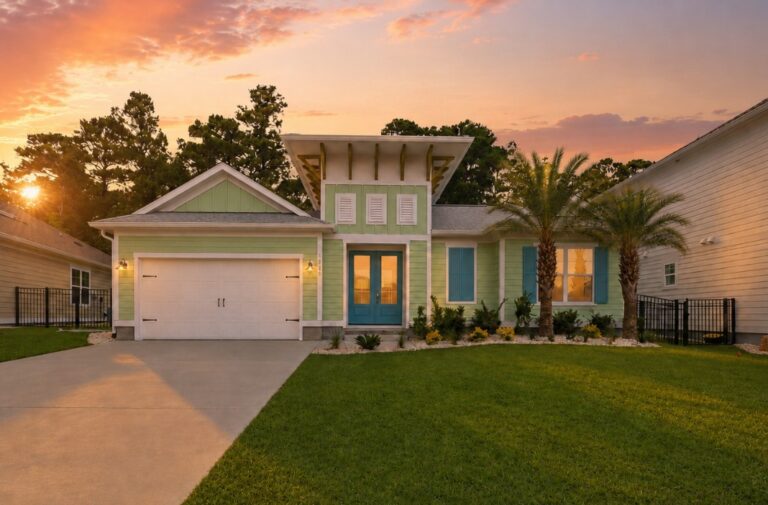
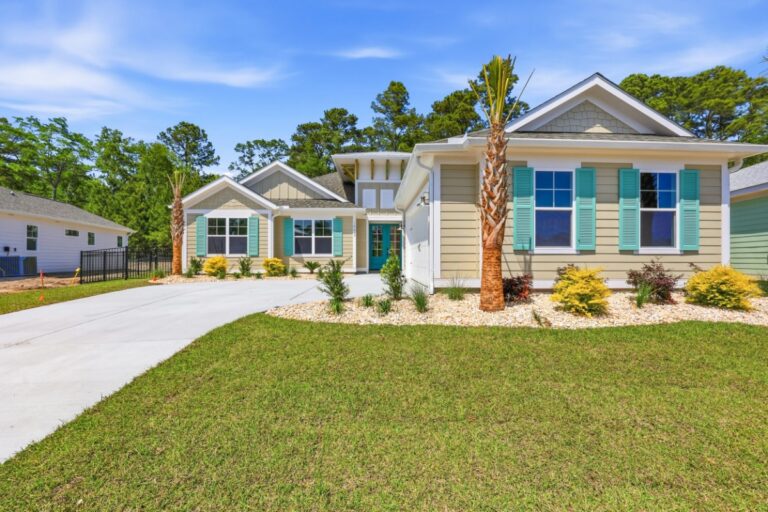
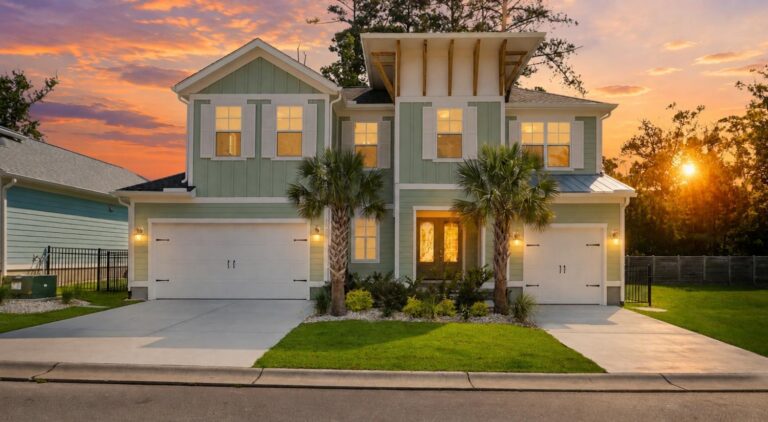
Kingfish Bay was built for people who understand that location is everything. Situated along the Calabash River in a setting of preserved hardwood forest, wetlands, and coastal bluffs, Kingfish Bay puts you within minutes of more outstanding golf than most people experience in a lifetime of travel, while also offering the river, the natural surroundings, and a private oceanfront Beach Club on Sunset Beach that no single-course golf community can match.
Golf Town USA is your neighborhood. Kingfish Bay is your home within it.
Discover what’s possible at Kingfish Bay — new homes in Calabash, NC, designed for coastal living. Explore the community →