
It doesn’t announce itself. There’s no campaign, no celebrity endorsement, no viral moment that put it on the map. North Carolina’s rise as the country’s most compelling retirement destination has happened the way the best things usually do — gradually, through word of mouth, through spreadsheets shared between siblings, through a phone call that starts with “we went down to visit friends and, well, we’re not sure we’re coming back.”
The people moving here aren’t following a trend. They’re doing math, visiting in person, and arriving at a conclusion that the numbers keep confirming. Something real is happening in this state, and it’s worth understanding exactly what — and why the most interesting chapter of it is playing out along the southern coast, in places like Calabash and Sunset Beach, North Carolina.
WHAT PEOPLE BELIEVE → WHAT’S ACTUALLY TRUE
This is not a state that wins on any single argument. It wins on the accumulation of them. So instead of a standard breakdown, let’s go through the misconceptions first — because the gap between what people assume about North Carolina and what they find when they look closely is where the real story lives.
“Florida is still the obvious retirement choice.”
Florida was the obvious choice for a generation that had fewer alternatives. The pitch was simple: warm winters, no state income tax, beaches. For decades, that was enough.
But Florida’s coastal markets have repriced dramatically. The same quality of waterfront lifestyle that cost a reasonable amount fifteen years ago now requires a significantly higher entry point — and comes with the added considerations of hurricane exposure, sharply rising property insurance costs, overcrowded infrastructure, and a summer heat index that makes outdoor living genuinely difficult for three to four months of the year.
North Carolina counters that pitch directly. The best retirement communities in NC — particularly those along the Brunswick County coast — offer a comparable quality of coastal life at prices that still reflect a market in the process of being discovered rather than one fully priced in. The tax picture, while slightly different from Florida’s zero-income-tax structure, is close enough at a 3.99% flat rate with full Social Security exemption that the practical difference for most retirees is smaller than it appears on paper.
What North Carolina adds that Florida cannot replicate is a climate that stays genuinely livable year-round — not just bearable, but enjoyable. The coast in January is cool, bright, and quiet. The coast in July carries an ocean breeze. Neither extreme asks very much of the people who live inside it.
“The best coastal spots are already overrun.”
This is the one that consistently surprises people who haven’t been to Brunswick County recently.
The Brunswick County coastline — spanning Sunset Beach, Ocean Isle Beach, Holden Beach, and the mainland communities around them, including Calabash, NC — covers 45 miles of Atlantic shoreline and remains meaningfully underdeveloped relative to comparable coastal markets. The towns here have grown, no question, but they’ve done so in a way that hasn’t erased the character that made them desirable in the first place.
The beaches are wide and quiet by the standards of almost any other major East Coast destination. The waterways are navigable and largely uncongested. The sense of being somewhere genuinely coastal — rather than somewhere coastal-themed — is very much intact.
The new home communities near Sunset Beach being built right now represent a window that real estate markets tend to close as discovery accelerates. People who got to the Outer Banks fifteen years ago know this feeling. The southern Brunswick coast is in that phase today.
“Retirement means slowing down. There’s nothing to do.”
This one tends to collapse the moment anyone actually visits.
The coastal lifestyle here is active by nature — not in the forced, scheduled way of a resort activity calendar, but in the organic way of a place built around the water. Kayaking from a community launch on a Tuesday morning because the river is calm and you have nowhere you have to be. Fishing off a pier in the late afternoon. Pickleball twice a week at Ocean Isle Beach Park. A bocce game on Saturday that you started attending casually and now show up for without question.
Communities in NC designed for this corridor understand that the best amenities don’t manufacture activity — they make it easier to pursue what was already there in you. A putting green steps from your door changes how often you work on your short game. A riverfront park with Adirondack chairs and thatched cabanas changes how many evenings you actually spend outside. A community garden, a cinema room, a full calendar of clubs and activities that residents actually shape — these things don’t feel essential until you’ve lived without them.
The residents who thrive in gated retirement communities in NC along this coast aren’t the ones who planned to slow down. They’re the ones who planned to finally do the things they’d been postponing for thirty years of career and commute.
“You’ll miss the city. It gets isolating.”
The geography of coastal Brunswick County addresses this more practically than most people expect.
Wilmington is 45 minutes north — the infrastructure of a mid-sized city: major hospital systems, a regional airport, a walkable downtown with a genuine restaurant scene, universities, and cultural events. Far enough that you’re not living inside the noise of it; close enough to serve as a reliable resource whenever it’s needed.
The Myrtle Beach metro is a comparable distance south. Between the two, every practical need is covered without requiring you to actually live in either.
And the smaller coastal towns themselves provide the human texture of daily life in a way that suburbs of larger cities rarely manage. Calabash — with its waterfront seafood culture and unhurried main street energy — is a town where you recognize the face at the waterfront restaurant after a few months. That isn’t isolating. That’s the opposite of isolating. It’s the kind of belonging that people in cities spend a lot of time romanticizing and rarely actually find.
“You need a huge budget to get into a quality waterfront community.”
This is where new construction in Calabash genuinely stands apart from comparable coastal markets.
The new homes for sale in Calabash at thoughtfully designed communities offer coastal architecture, outdoor living spaces, and resort-level amenities at price points that would be impossible to find in equivalent markets in Florida, coastal South Carolina, or New England. Brunswick County property taxes are among the lowest in North Carolina. The cost of living in the corridor consistently runs below the national average.
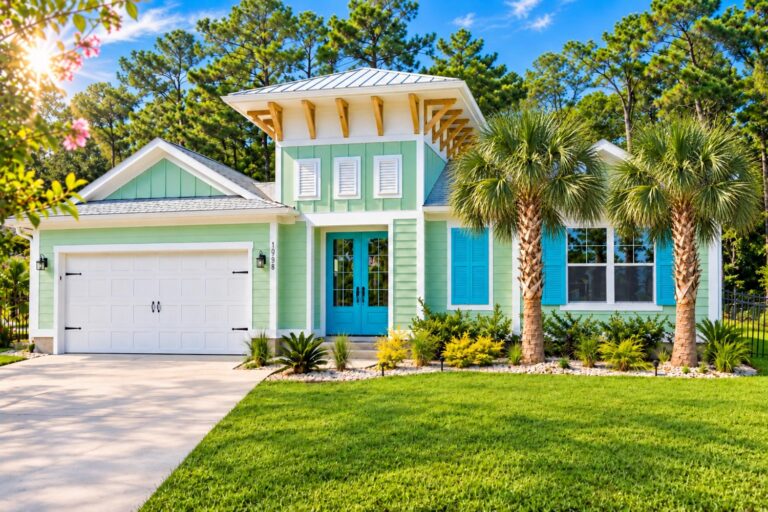
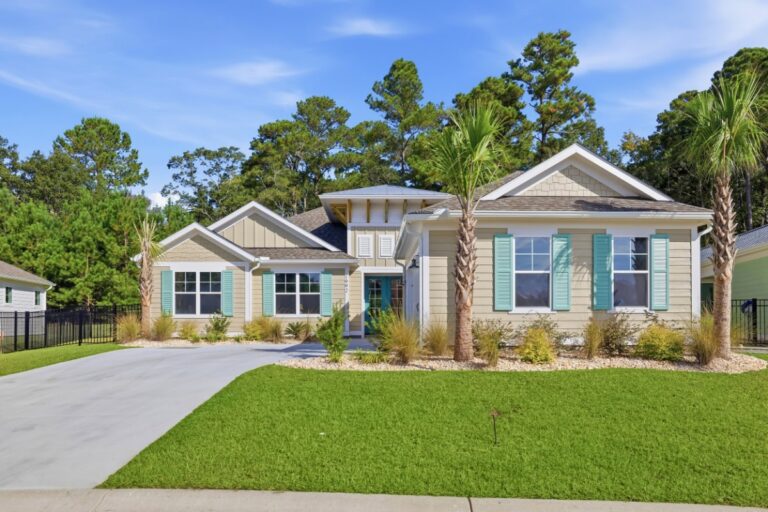
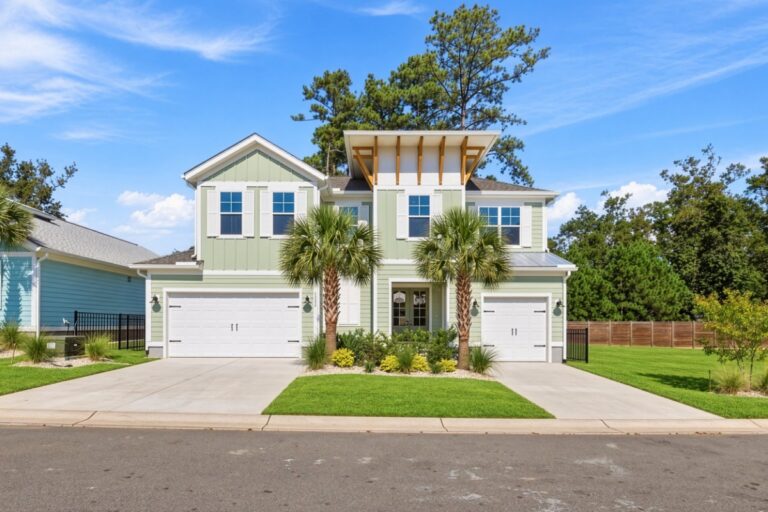
What’s available in new home communities in Calabash reflects a genuine range — not just price variation but real variation in scale and purpose. Cottage and bungalow plans for those who are done with excess square footage and maintenance overhead. Larger signature and waterside home collections for those who want space for visiting family, a dedicated home office, and an outdoor living environment with a private pool. A custom home program for buyers who arrive with a specific vision and want to build it from the ground up.
At Kingfish Bay — one of the master planned communities in Calabash designed explicitly for this lifestyle — residents also receive something that most communities at any price point don’t offer: private, exclusive access to a beachfront clubhouse directly on Sunset Beach. Open-air decks overlooking the Atlantic, a modern kitchen, bathhouses, and dedicated parking. The beach isn’t a destination — it’s an amenity that comes with the address.
“North Carolina is just for certain kinds of people.”
The most interesting thing about who is actually moving to 55-plus communities in NC right now is the range.
Retired teachers from Pennsylvania. Engineers from Michigan who had worked for thirty years finally looked up from their desks. Couples from New Jersey who spent a decade saying “eventually” and eventually arrived. Former executives from the Chicago suburbs. People in their early sixties who sold a house in Connecticut and bought two things: time and a new home near Sunset Beach.
What they share isn’t background, income bracket, or profession. It’s a particular decision: to stop treating retirement as a future event and start treating it as something they’re actively designing right now. The gated retirement communities that serve this group well are the ones that understand the decision wasn’t impulsive — it was researched, compared, and arrived at after looking hard at every alternative.
The “Quietly” Part
The title of this post uses the word quietly, and it’s worth sitting with that for a moment.
North Carolina hasn’t risen through aggressive promotion. It doesn’t have the marketing infrastructure that Florida has built over fifty years. What it has is something harder to manufacture: a genuine combination of financial, climatic, cultural, and geographic advantages that holds up under examination from every direction — and a word-of-mouth network of people who got here early and can’t stop telling their friends.
Loud places are usually selling something. Quiet places that keep drawing people anyway are usually delivering something.
The North Carolina retirement communities on the water along the Brunswick County coast — the Calabash corridor, Sunset Beach, Ocean Isle, the river communities along the Intracoastal Waterway — are delivering something. It’s worth at least one trip down to see for yourself, on a Tuesday in October when the crowds are gone, the light is extraordinary, and the water is doing what it always does: entirely unbothered by what you thought you knew about retirement destinations.
Kingfish Bay is a private gated community on the Calabash River in Calabash, NC, with no age restrictions but tailored to a more relaxed way of living. — just 5.5 miles from Sunset Beach. Home collections range from low-maintenance cottages and bungalows to custom waterfront estates. Residents enjoy a private Oceanfront Beach Club on Sunset Beach, riverfront park, resort-style pool, kayak launch, fishing piers, nature trails, fitness center, community clubs and activities, and 60+ acres of preserved coastal landscape.